
On An Old Man's Game
The Later Collaborations of Ken Takakura and Yasuo Furuhata

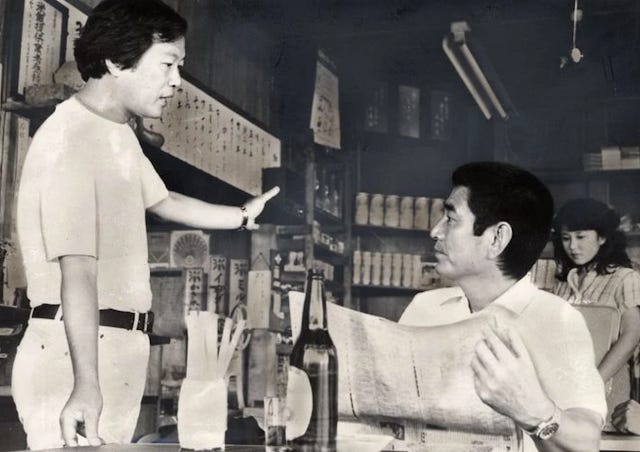
Throughout the history of Japanese cinema one can find numerous collaborations between an actor and a director that have come to be seen as defining. Kurosawa and Mifune, Chishū Ryū and Yasujirō Ozu, Mikio Naruse and Hideko Takamine, Kiyoshi Kurosawa and Koji Yakusho - to name but a handful - they're works which are looked upon and studied for not just the number of collaborations but the consistent (or inconsistent) nature of each project. Ken Takakura had numerous long-lasting relationships with multiple directors throughout his long and storied career - and all of them are worthy of merit in one way or another, but one in particular stands out, at least to me, as being one in which there was a constant need, or desire, to revisit multiple times throughout his career.
Early collaborations of note seem to be with directors Tomu Uchida and Teruo Ishii. The former would help to establish Takakura's image as a face of authority, an image of stoicism in the face of a world going out of control. The latter would harness his darker sides - using the same stoicism as a mask for violence and rage within his exploitation features. These two collaborations wouldn't be his only but seem to be the grounds where he learned how to harness his image in certain ways that ultimately helped to make him such a box-office draw for as long as he was. Other filmmakers like Masahiro Makino and Kinji Fukasaku would harness both sides of him for their own work in the 60s and 70s while his collaborations with Jun'ya Sato and Shiro Moritani would emphasize these aspects as his image grew to almost symbolize the ideal Japanese man in the late 70s and 80s. But it was with a small yakuza drama, ‘Glorious Fights’ (1966), in 1966 where he would first meet and collaborate with the director who would offer him some of the most significant roles of his career and help to showcase a side of his persona that had rarely been able to be presented prior.
Takakura's image, throughout his career but especially early on, was one that exemplified a kind of idealized version of the "Japanese Man", in a conservative sense. He was a man of, generally, upstanding character who, even if he was involved with the yakuza, was unflinching in his commitments and devotion to work and country. He was under no influence from the West. While he may be tempted by a woman, in many of his early films as a leading man, by the film's conclusion, he would abandon his love interest in favor of remaining solitary. He was devoted to his work or his group. And many of the directors who he worked with at that time, in my estimation, were very masculine in their interests. Whether the ideology within their work was conservative or liberal, the version of masculinity they presented via Takakura wasn't one that ever challenged his image. Yet it is within ‘Glorious Fights’ that, while the film is squarely within the established worlds and genre Takakura had worked in to great and many successes at that point, Furuhata allowed just a bit more of a tip than usual.
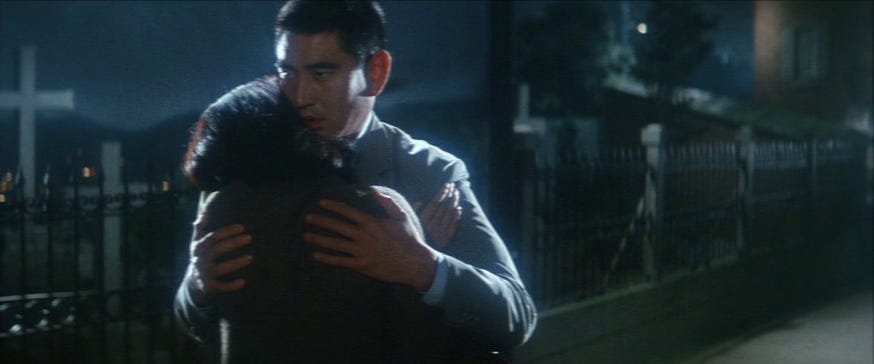
While it is very clearly a gang picture, Furuhata emphasizes, particularly in the second half of the film, a greater sense of romance and melodrama - with Takakura's character dying on his way to meet up with his girl (who is waiting for him at the docks). The last shot of the film is not of Takakura dying, it is of Yukiyo Toake waiting for him as their ship departs without either of them before fading to a wide shot of the coastal town. There is no honor in his death here, just a member from a rival gang who strikes him down. So the film ends on a note of tragedy - a doomed romance ended by cruel fate not because of an honor-bound man.
Given his image of an ambassador in his later years, it's not at all surprising to see Takakura did attempt to branch out into American cinema. While none of the films he was in are in any way bad, at their worst they could be described as “mediocre” (with ‘The Yakuza’ [1974] at the top end and ‘Mr. Baseball’ [1992] being at the bottom) - there clearly wasn't the success, either financially or culturally, for him to be able to secure the same kind of iconographical status of someone like Toshiro Mifune, and presumably that was in some ways the attempt. And it would be more than fair to say that basically none of Mifune's American films are really any good, so in that way Takakura was able to at least maintain a level of quality his predecessor did not, but he never had the same overseas perception of an icon that Mifune did either. Regardless of how well received the films of his did in Japan and neighboring markets, for all his collaborations, Takakura never had a Kurosawa to cement his image in the eyes of cinema viewers the world over.
What Furuhata's real gift was, in regards to working specifically with Takakura, was that he didn't so much challenge his image, but provide different shades to it. The roles Takakura plays in his films are not dissimilar to those he did for many other directors, it's more what Furuhata brought out and allowed his star to exude and exemplify in his films that make them notable. It's a tenderness, a melancholia, a deeper sadness which has always existed behind his eyes. For me, a lot of his early roles were not so dissimilar to that of fellow actor and occasional co-star Koji Tsuruta. They both presented an exterior which belied a deeper interior world. The difference, at least for me, was that within Tsuruta there lied a powerful rage and ability for violence, but for Takakura, it was a rich world of sadness. Takakura’s eyes never presented, to me, rage and anger as well as regret. And it's through his later collaborations with Furuhata that Takakura reached numerous peak performances which stand as defining for his entire career, for me.
It's important to note that Furuhata was not an action director. While he could certainly direct action sequences quite capably, that was not where his greatest strengths lied. Even early on in his career, when he was directing various installments of the ‘New Prison Walls of Abashiri’ (1969-1972) or ‘A Modern Yakuza’ (1969) series and various one-off crime films, it wasn't the moments of stylized violence that land as hard as the quieter moments when Takakura (in particular) ruminates on his present, his past, on his role in the world.
While this obituary for Furuhata states that his talent was in showing and focusing his films on outcasts of society, I feel like that does a disservice to the ideology that is very clear in his films. From the outset his films had a very specific and clear interest in the working class and downtrodden and particularly how when they unionize or create bonds (unions) they become stronger. It's this particular ideology which makes those early exploitation films stand out as more than just the average yakuza or prison film. But also why in later works, specifically his two installments in the ‘Yakuza Ladies’ series (1989/1994), feel so bland. I have always assumed that his heart just wasn't in either of those films. While they're perfectly well made and the second one in particular has a striking ending, they ultimately feel little more than moving wallpaper and exercises in product filmmaking.
It’s Hard Out There For A Working Man (1978 - 1985)
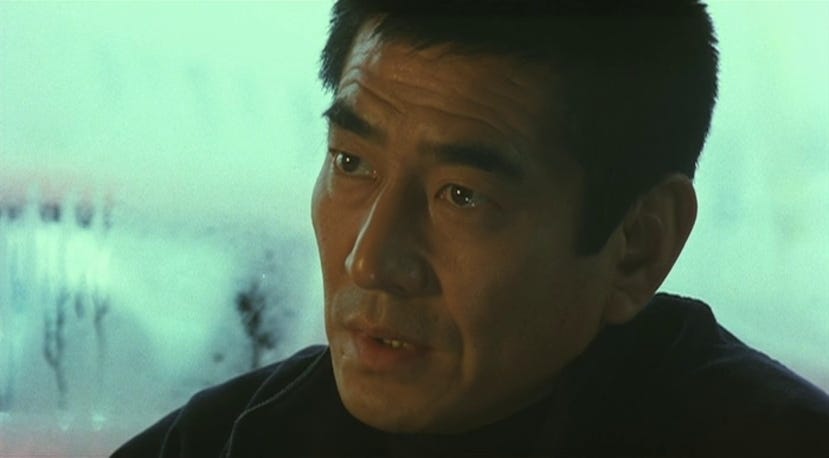
Of these later collaborations, the first one (or at least the one I consider the start of this later period), ‘Winter’s Flower’ (1978), is the closest to the standard Takakura film of the period. He’s a recently released yakuza member who is now thinking of getting out, all the while communicating via letter to the daughter of the man he went away for killing - telling her he’s an uncle who lives in Brazil. That’s a simplified version, obviously, but hopefully gives an indication of how tonally this differs from the standard gang vs. gang picture this is. Even the color palette has shifted into a more muted blue. It’s a colder, more emotionally fragile film. It’s where Furuhata really starts leaning into his more melodramatic tendencies. Yes, the standard genre stuff is still in there, but as a starting point for where their collaborations would go from here, it’s an accessible and understandable beginning.
Films that followed in the mid-80s like ‘Choji Snack Bar’ (1983) and ‘Yasha’ (1985) utilize genre elements and character tropes to similar ends. Though by then, even the more plot-heavy beats have become more diffuse in favor of more complex inter-character dynamics. But it was ‘Station’ (1981) that remains the pair’s greatest work and most profound statement.
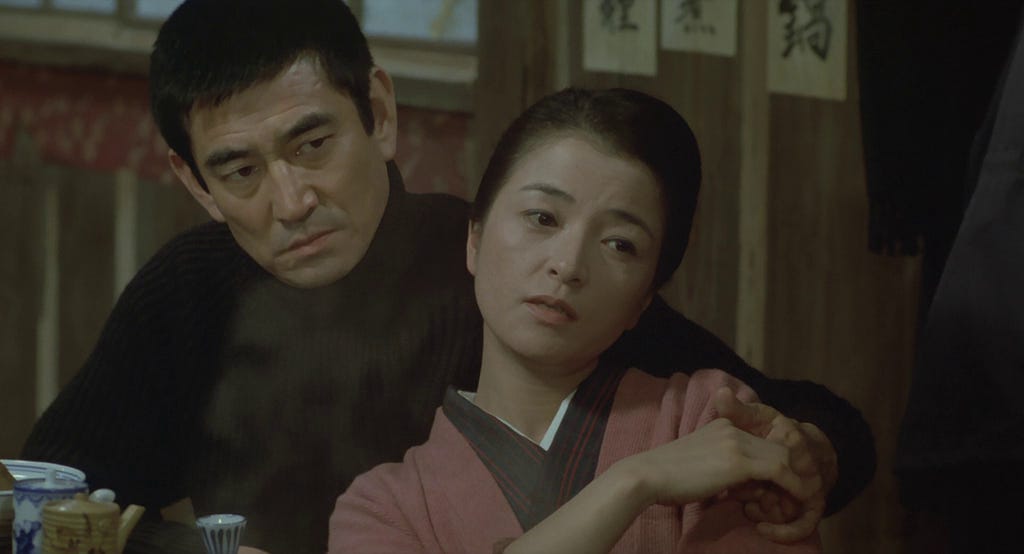
When looking at all the pair’s collaborations it becomes clear how the concept of responsibility is utilized repeatedly within Furuhata’s cinema. “Responsibility” in both the national and personal sense. What is a man’s duty to his family, to his work, to his country? Furuhata’s melodramas with Takakura are constantly examining the ways in which men (in Japan especially) must reckon with conflicting interests given whatever role they hold in society - the criminal, the cop, the father, the friend, etc. Often placing his characters at a crossroads where their own interest’s conflict with that of the world around them, ala the roles they’ve come to play and jobs they work. I bring this up specifically in relation to ‘Station’, due to it being the epitome of this conflict within the characters work.
‘Station’, which takes place over a decade, sees Takakura’s cop coming to several crossroads in his life and having to deal with the consequences of each in the subsequent years. The symbolism isn’t hard to miss here. At each station Takakura must make a crucial decision, and yet we are only privy to a select few. Sometimes there are split second decisions, like shooting two robbers during a heist and having to deal with the knowledge that he killed them despite saving the lives of the hostages inside. While other decisions took time, like him leaving his wife and child and sending them away at the beginning of the film. Other decisions are made off-screen, his participation in the Olympics for example, making us privy to a select few. It’s the small moments that make him who he is, just as they make us who we are, like the mother of one of the robbers screaming “cops are murderers” or the look of his ex-wife before she and their child depart on a train, and often those are the ones that linger within our minds longest.
If Takakura's character is representative of the duo’s collaborations as a whole, and a man is someone to be devoted to his job, or to his craft (in another sense). This character’s sidelining of the things that may bring him happiness or pleasure to his own detriment can be read as a broader metaphor for what Furuhata and screenwriter Sō Kuramoto see within Japanese culture of that time. A focus on duty and the commitment to it coming at the cost of personal satisfaction.
But I mustn’t forget to mention how Furuhata’s filmmaking is also probably at it’s most beautifully restrained here. Not that he was ever a particularly showy filmmaker to begin with. There are several sequences (I think particularly of the first meeting between Takakura’s Mikami and Cheiko Baisho’s Kiriko) that are simple back-and-forth shots. These sequences have less to do with looking great on an individual shot-to-shot level but more with the timing of an edit or choosing the right reaction shot or angle to frame an actor. It’s capturing a moment in time and knowing just how to utilize it to its fullest and most effective. It’s knowing how to let a face reveal more than the words being said.
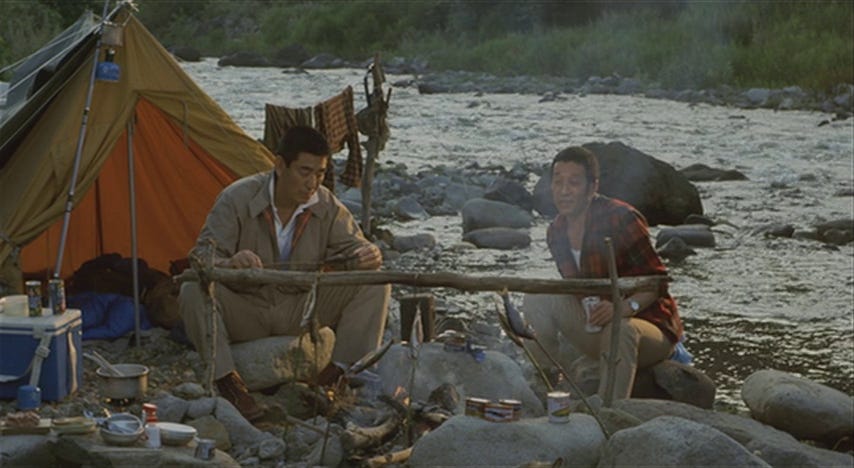
‘Choji Snack Bar’, in retrospect, is a precursor to the types of films the two would collaborate on going forward. It injects some darker shades into its narrative that complicate the naturalistic tone of what is otherwise a pretty relaxed character drama. ‘Yasha’ is arguably the closest to ‘Winter’s Flower’ in terms of its usage of the ‘yakuza genre’ as a foundational structure and a jumping off point in order to explore regret. In this way, ‘Yasha’ is far less overt and literal in how it manifests melancholia. It’s arguably the most straightforward and enjoyable of this period of their collaborations1. It also lacks much of the richer textures of the prior three films in favor of more straightforward yakuza conventions (and an enjoyable supporting performance from Takashi Kitano). These two films don’t so much differentiate the formula established in either 'Winter’s Flower’ or ‘Station’ as much as they subtly shift the role Takakura’s character.
What these two films do is accentuate the desire and importance that maintaining and upholding what could be deemed as a “simple life” rather than an expected one of extravagance and social mobility. In ‘Choji Snack Bar’, the Takakura character refuses to abandon his passions in order to climb the social ladder. He instead chooses to give up opportunities that would move him into a high social class and a manager of his peers. The opportunity to take over a small titular titled bar and work for himself becomes far more appealing, repeatedly declining the offer to expand the business into further areas. In ‘Yasha’, Takakura’s character leaves a luxurious life of crime after the murder of his sister. He must hide his former life from the fishermen around him lest his identity be uncovered and forced to return to his prior life.
The Old Man’s Back Again (1989 - 2012)
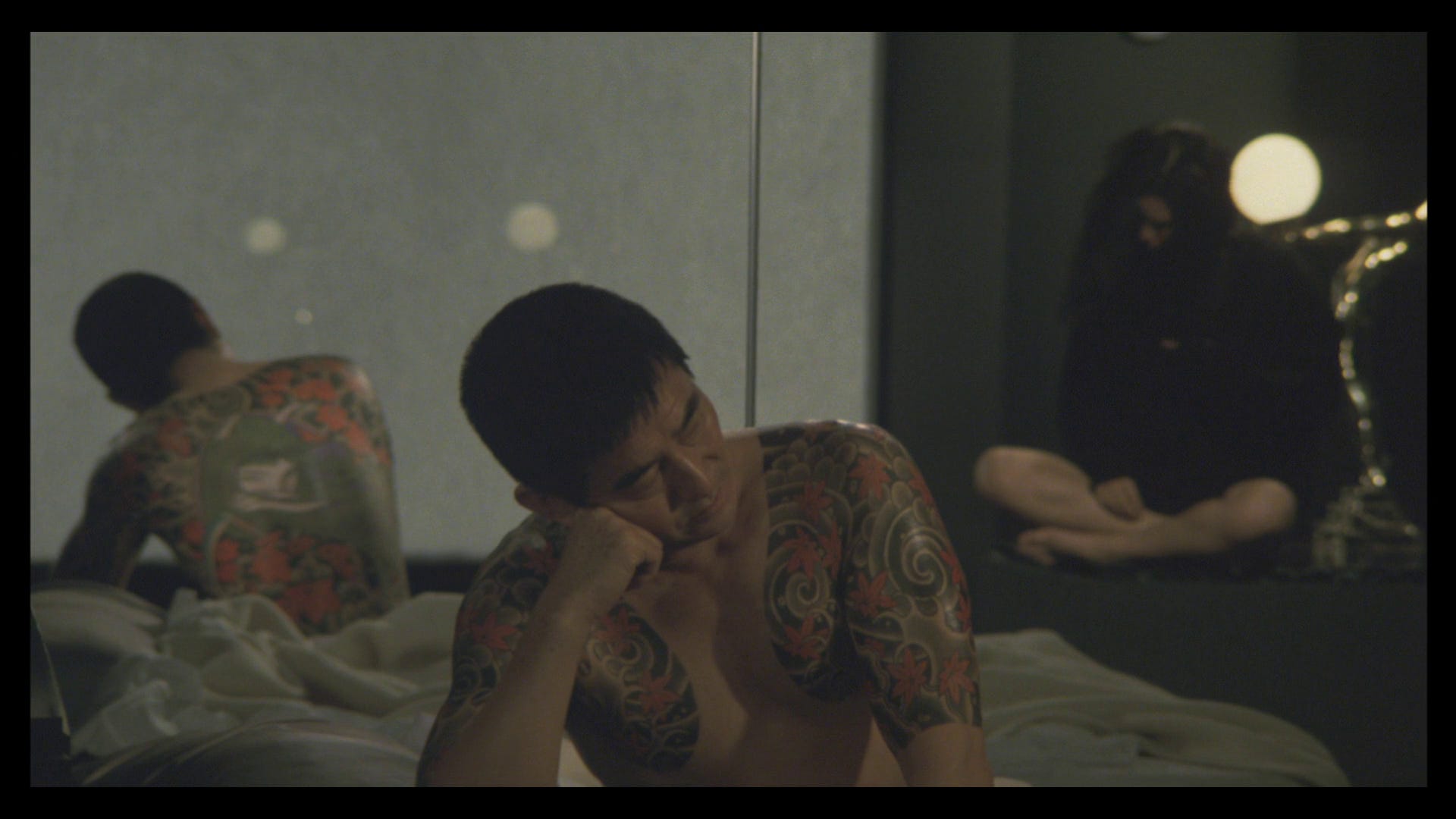
If there’s a division point between these first four films2 and the next four3 it’s revealed in 1989’s 'Buddies’. This film alters the trajectory of the duo’s collaborations significantly. It foregoes the more grounded genre digressions and explorations, in favor of a more classical and, to some degree, more awards-baity fare. A film set in the days leading up to war in Manchuria. It tells the tale of two old army friends who reunite and must confront their past. This is really where, tonally, Furuhata’s approach noticeably shifts from the melancholic to one of increasing sentimentality. For better or worse, this becomes a defining trait going forward in the duo’s work.
Given the time when ‘Buddies’ was made, and the work of similarly genre-known filmmakers who transitioned into making larger period dramas and biopics during the 80s4, it’s actually a little surprising it took Furuhata until the end of the decade to really dive into that world. While the film is a bit too designed (for my taste) he adapts to the approach and style better than some of his compatriots did. His wonderful sense for regret remains intact, even if the aesthetic doesn’t completely match that aspect. He has a wonderful sense of staging and knowing how to navigate moments of high emotion. The sequence when the two friends begin to first become combative is shot in (recreated) sunset with dewy hues surrounding them, allowing the tension between the two to register more through performance than setting. This differs from how prior films would demonstrate this and would allow the setting to carry as much weight as the performances and dialogue.
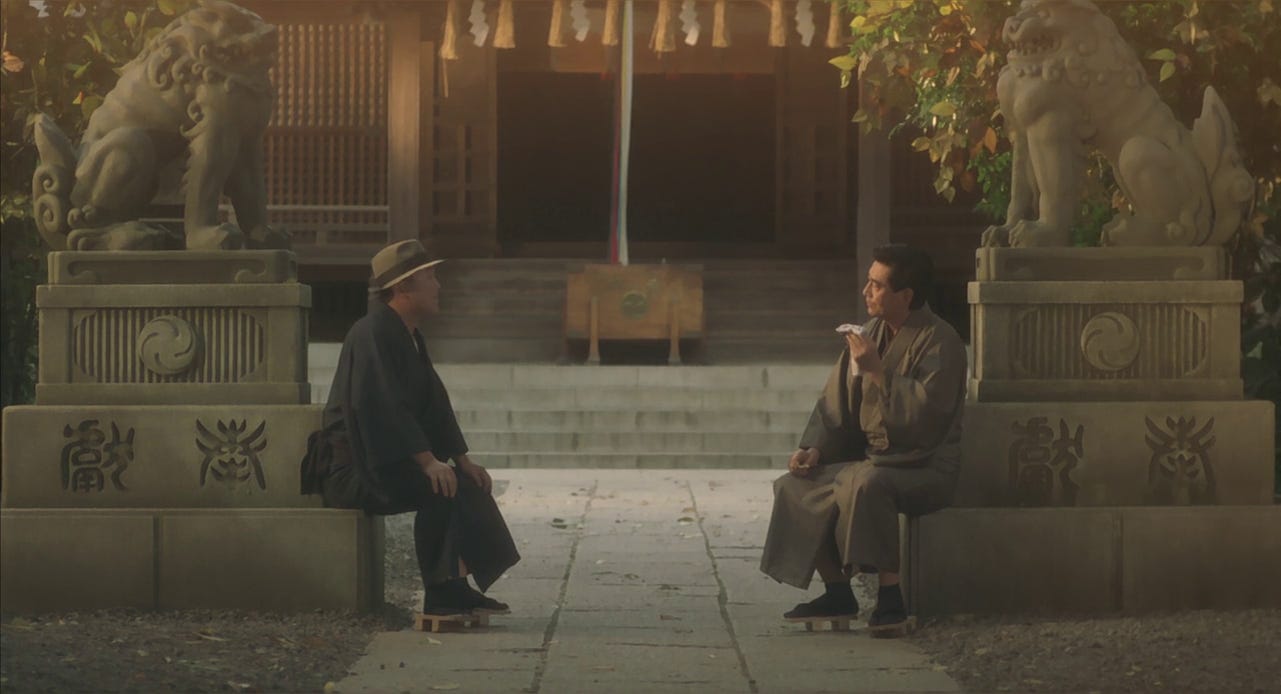
Like a golden thread running through Takakura and Furuhata’s collaborations, their films have a specific relationship with and interest in unionization and the strength of a collective. So it is worth noting, that ‘Buddies’ is the first film where this ideology becomes watered down. It’s about two well-to-do friends fighting over linked and complex marital affairs rather than the trials and struggles of living under a capitalistic system. His ideology becomes mired and weighed down as the drama lacks the kind of specificity of social milieu he had imbued the worlds he had previous presented in films. Personally, I consider that a loss, though some might find the lack of said ideology more of a positive as it allows the drama to play out in a broader fashion, working more strictly on an emotional level than on any kind of propagandistic one.
If the first four films5 of their collaborations was about finding new ways to destabilize tired narrative and genre conventions. Then these next set of films6 are about attempting to find a resonant truth in convention. The greatest of these four latter films would come in the form of 1999’s 'Railroad Man’. If ‘Buddies’ was an embrace of unabashed sentimentalism, then ‘Railroad Man’ is the point at which it becomes the dominant tone of their collaborations.
With that being said, it was also the duo’s most successful film commercially - being the third highest grossing film in Japan of that year and basically sweeping the main categories at that year’s Japanese Academy Film Awards (where it won Best Film, Best Director, Best Screenplay, Best Actor, Best Actress, and Best Supporting Actor). It was an undeniable smash.
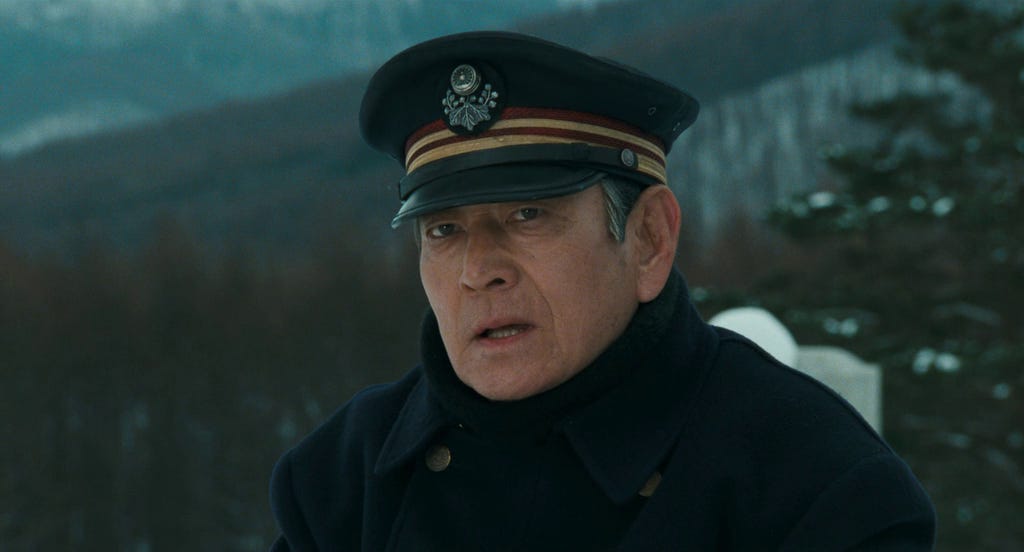
A portrait of an elderly station-master who’s station is scheduled to close soon, and through encounters with a young woman, must learn to finally deal with his past. Luckily the plotting of the film isn’t where it’s strength lies. For all its expected turns and cloying close-ups, there’s little denying how Furuhata shoots. Personally, I do find it to be mostly effective in trying to elicit emotion, though understandably others might find it to be far too ‘syrupy’. The best moments are when Furuhata doesn’t go about filming the “BIG” scenes in the expected ways. When he pulls back, playing scenes in wide instead of in close-ups, their impact feels more well-earned, though I won’t say a couple of Takakura’s close-ups aren’t effective.
It’s well discussed that the film ‘Railroad Man’ could be read as a critique of old-world values in a rapidly changing society. It’s certainly true that the film has that aspect, though it isn’t really as harsh a critique, as the film’s overall tone is far gentler to really deliver anything too scathing. By this point in Furuhata’s career, the more aggressive tendencies of unionization had been scaled back into a more general community-based form of support. Less radical, though frankly, not entirely surprising. Takakura’s unionized character serves more as window dressing and characterization than anything substantive to the narrative as a whole or in order to serve a larger ideological framework.
The two reunited quickly after to make the survivor’s guilt drama, 2001’s ‘The Firefly’. If any of the films the two tackled together could be called “important” it would be this one - as it’s very much the kind of film that strikes one as being about a subject of deep importance. Frankly, it’s a little bit dull.
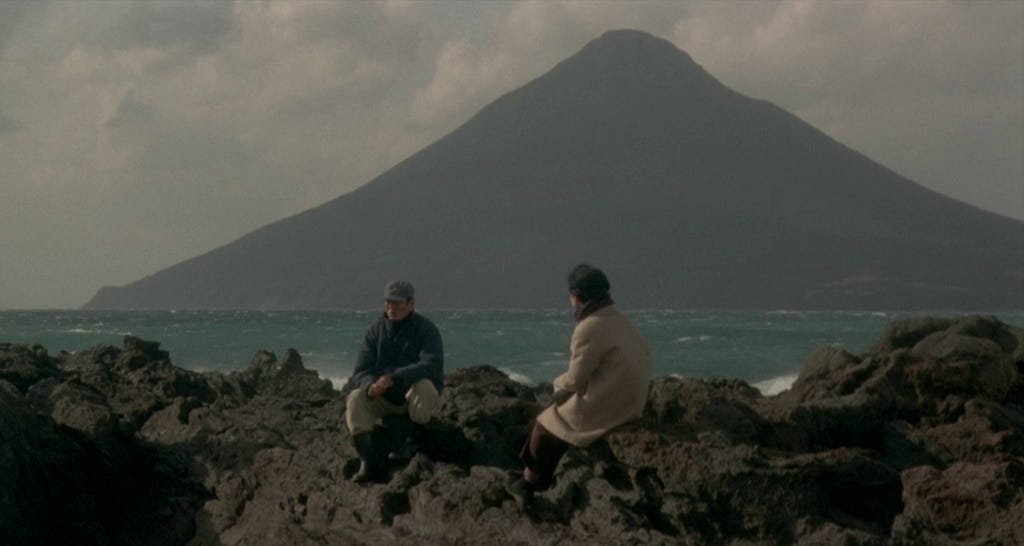
That’s rather harsh, and I don’t mean to disparage the efforts of all those who worked on the film, but this is the kind of tasteful and respectful fare that ultimately comes across as more neutered than powerful. The general tone is more placid than brimming with any kind of feeling. Even Furuhata’s filmmaking here seems drained of life - which could, arguably, be on purpose - but I doubt it. Given how the score is utilized and how scenes are played out, there’s a certain expectation of hitting a mark or register that will make an audience member ‘feel’ something. But there’s none of the attention or care to any of the character’s emotions like he would do in his prior films, so the entire endeavor just feels more tossed off than considered.
The film is more of a memorial for the kamikaze pilots during WWII, specifically those who came back only to live on with the guilt and stigma of having failed their mission. A noble, and even admirable film to create, it is an attempt to destigmatize the legacy of these soldiers. It is however, a film that lacks even more of a identifiable ideology than his prior film. There is the acknowledgement that the act of ‘kamikaze’ is terrible (obviously) but those who lived through such events, should not be shunned or ashamed for surviving. Sadly, Furuhata’s work here is purely functional beyond that point. There’s little in the way of interrogating the world beyond or behind what leads those to either go along with or go against an ideology which is drilled into young minds during wartime.
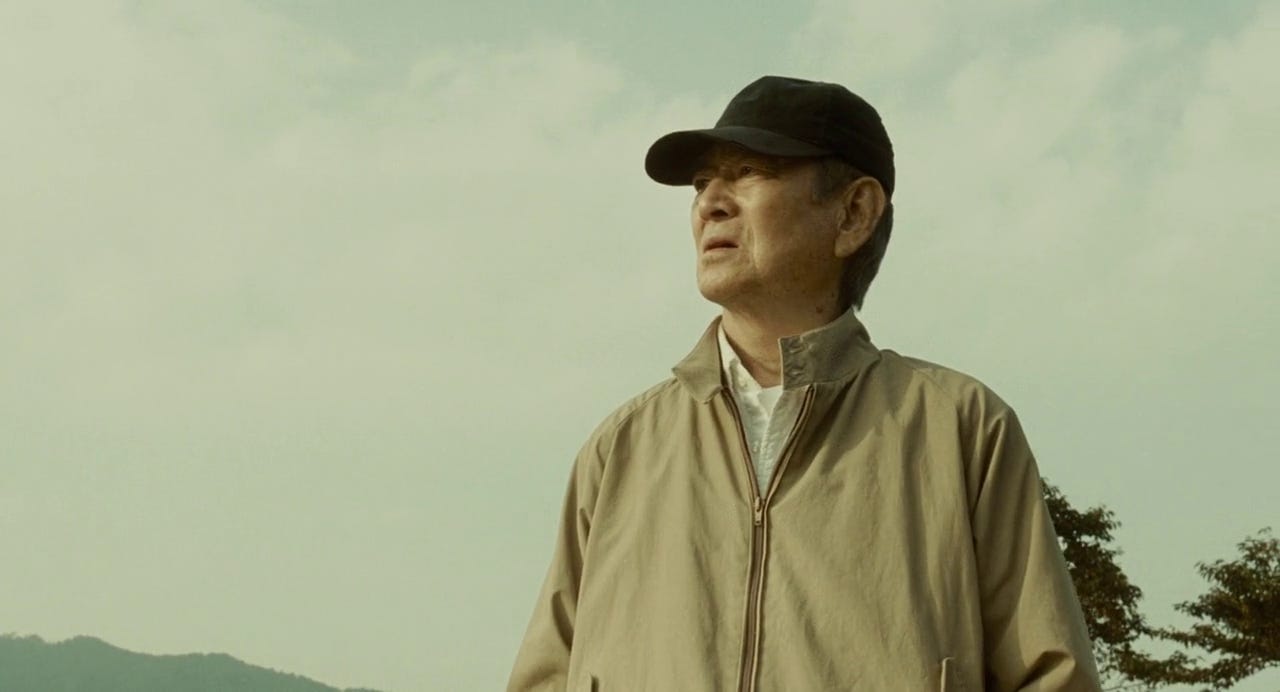
The duo’s final collaboration would come in 2012’s ‘Dearest’. A ‘schmaltzy’ tale of an older prison officer traveling from Hokuriku to Nagasaki to spread his wife’s ashes across the sea next to her hometown. In many ways, this is the most modest of all of the collaborations. Despite it’s ‘sappiness’ and tendency to fall into ‘weepy-territory’7, there is a kind of charm in how unabashed it is in its emotional framework. In this way, I find it a more honest, if certainly even more conventional, film than 'The Firefly’. There’s little impression that anyone involved was trying to make any kind of grand statement. It is a work, solely about itself and it’s making.
In a sense, there’s less overt beauty here - although it’s certainly still there. If one is to find beauty within the frames, it is in the kind of ‘unadorned-ness’ of each image. There’s an almost hand-crafted nature to each image. Not to where each image is so impressive or framed and lit in a striking way, but in a way which emphasizes the beauty in the everyday sights and objects that surround us. So it’s perhaps fitting, that the general tone of the film is far kinder, than any of the pair’s other films. Both on Takakura’s character but in general. It’s through this tone that we see a slightly different side of Furuhata’s (now fully-)blossoming sentimentality.
To see a film like this one which, in my mind, comes at its narrative from an honest perspective, I think is worthy of at least a little bit of respect. If I was to take it a step back to the golden thread of unionization, I’d say that Furuhata’s outlook here, while broader, is still in tune with his earlier films. Here, the many isn’t a single group of people but rather ‘the people we met along the way’, as the crude aphorism goes. It’s simplistic, perhaps even idealistic, but there’s a profundity in seeing strangers willing to just be kind to one another. No big gestures or favors, just small acts of kindness to help one-another.
If sentimentality in the pair’s prior films was meant to evoke certain feelings within an audience, generally, it is to elicit tears. ‘Dearest’ goes a step beyond. It wants the audience to be able to sympathize with the suffering and regret of those who have lost someone close. It also asks us to acknowledge the affect of those on the outside who can, unbeknownst to themselves, cause the greatest of impacts on those suffering. Specifically, an audience, especially a Japanese audience, is asked how they should respond to an older and a more frail Ken Takakura. Even from an audience without that same generational attachment to Ken Takakura, there’s a kind of authenticity one must confront when presented with a film which in no way attempts to frame itself in a cynical or ironic context. Like dealing with the best of melodramas (which I’m not claiming this is), one has to be able to meet it at it’s level without skepticism. Within the cinematic landscape ‘Dearest’ was birthed into, to wear one’s heart on their sleeve is to be openly mocked and derided for being ‘cheesy’ or ‘old-fashioned’. ‘Dearest’ is a film that exists to present us with a world that could be. A world where we are all our best selves and where we’re all invited to grow without judgement.
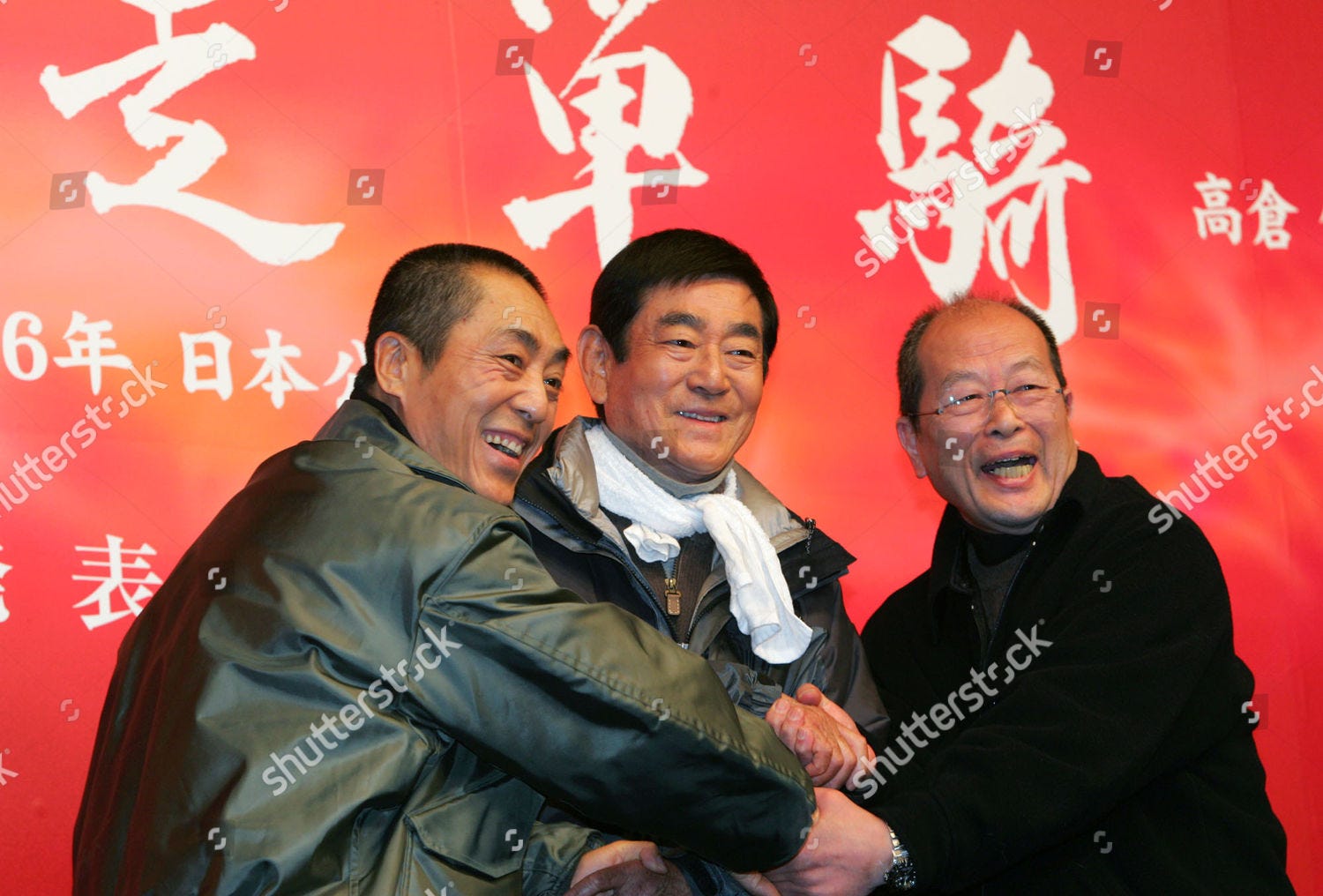
For the last three or so decades of his career, Takakura wouldn’t act in very many projects, but it would be with Furuhata with whom he would continue to work with over and over again throughout the years. In the 80s he would make only ten films8 (compared to the almost forty9 he would make in the 70s) and by the 2000s he would only make three films1011, all of which have been discussed above. It says something that Furuhata was the director who was able to keep drawing Takakura back, that the two of them were able to show a different side to the hard-man Takakura so often played in his youth and which, to this day still mostly defines his image.
Just to be thorough here, it’s worth mentioning that Furuhata did do some filming on Zhang Yimou’s 2005 film with Takakura, ‘Riding Alone for Thousands of Miles’. Though it amounts for less than 10 minutes total of the entire film, all the scenes which take place in Japan were filmed by Furuhata. Bizarrely, Furuhata’s approach is not that dissimilar from Yimou’s here12, the film is far more down to earth than the more grandiose and spectacle-driven films Yimou was making around this time. If there’s a tangible difference between the two, I would say that Yimou’s work is a bit warmer and less emotionally restrained, allowing for some of the most directly emotional scenes in Takakura’s entire career.
Ken Takakura, would pass away two years later at the age of 83. Furuhata would direct two more features, the social drama-biopic ‘A Boy Called H’ (2013) and the crime melodrama ‘Reminiscence’ (2017) (one of his best films in my opinion). He would pass away in 2019 at the age of 84. Their collaborations are mostly ignored by the wider cinephilic community, often relegated to an occasional detour in Takakura’s career into more ‘serious’ or ‘awards worthy’ fare and not much else. I’m hopeful that as a result of this piece a few might decide to look further into (or just watch) their collaborations and see the craft of a real artist and his muse.
It’s important to always be searching for creators who’s work isn’t as well known or celebrated as the standard torchbearers. In some ways, it is the creators who we ignore that might become some of the most significant to us once we stumble upon them. For all work matters to someone and I feel it’s important to bring attention to an artist who worked for decades and will likely be forgotten by the wider film culture. Unless we cultivate a desire, an urge, a necessity, to constantly be digging and searching, many will fall through the cracks and their importance, or significance, will never have the chance to reach those who might find the most within their art.
Winter’s Flower (1978), Station (1981), Choji Snack Bar (1983), Yasha (1985)
Winter’s Flower (1978), Station (1981), Choji Snack Bar (1983), Yasha (1985)
Buddies (1989), Railroad Man (1999), The Firefly (2001), Dearest (2012)
Winter’s Flower (1978), Station (1981), Choji Snack Bar (1983), Yasha (1985)
Railroad Man (1999), The Firefly (2001), Dearest (2012)
Not bad qualities
https://letterboxd.com/actor/ken-takakura/decade/1980s/
https://letterboxd.com/actor/ken-takakura/decade/1970s/
https://letterboxd.com/actor/ken-takakura/decade/2000s/
https://letterboxd.com/actor/ken-takakura/decade/2010s/
https://www.imdb.com/name/nm0955443/